How to Get to Cuevas de San José and What to See Nearby
Most people assume Spain's longest navigable subterranean river hides deep in the rugged Pyrenees or beneath some remote limestone plateau in Andalusia. It does not. The river sits tucked right at the foot of the Sierra de Espadán mountains, barely forty minutes north of Valencia by car. Finding your way to this ancient waterway is surprisingly straightforward once you understand how the regional highway junctions line up, so this complete guide to cuevas de san josé como llegar breaks down the route choices, driving quirks, and transit combinations that actually work in real life.
Whether you are driving down from the northern beach enclaves or jumping on a regional commuter train across the citrus flatlands of the Plana Baixa, arriving with time to spare makes all the difference. Entry windows are strict, and missing your boat departure because of a wrong roundabout turn near Vall d'Uixó ruins a morning fast. Here is everything you need to know about the journey, parking logistics, and the best places to explore once you step back out into the Mediterranean sun.
Book your san jose caves valencia experience:
Dónde están las cuevas de san josé: Valley Geography and Layout
Geographically, the caves belong to the municipality of La Vall d'Uixó, situated in the southern half of Castellón province. The town itself rests in a natural valley shaped like an amphitheater, flanked by rocky limestone crags to the west and opening up toward the Mediterranean coastal plains to the east. If you look at a regional map trying to pin down dónde están las cuevas de san josé, search roughly halfway between the cities of Valencia and Castellón de la Plana, about eight kilometers inland from the coastline.
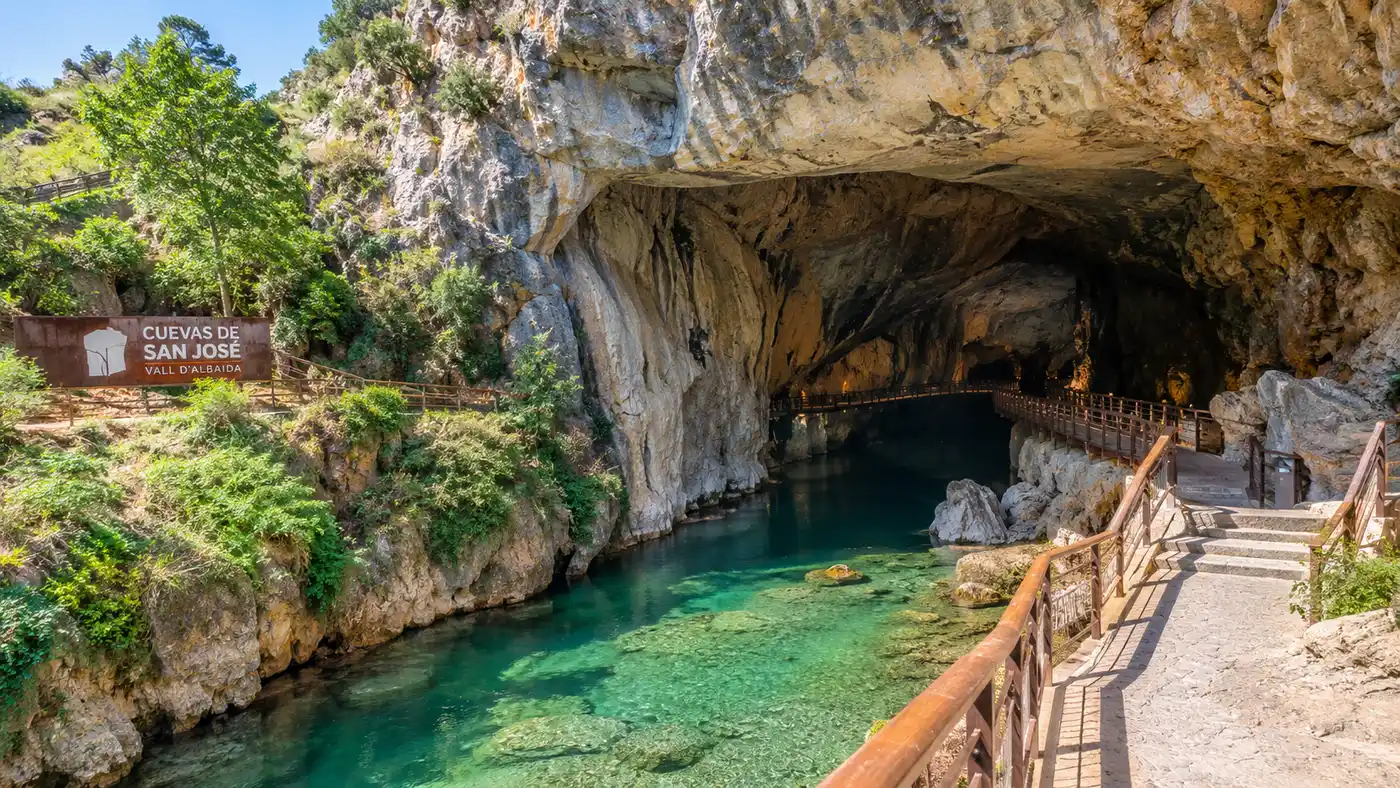
The cave mouth does not sit in an isolated mountain pass. It opens directly into a developed leisure park known locally as the Paratge de Sant Josep. Here, freshwater gushes straight out of the cliffside spring into an emerald holding pond bordered by plane trees, picnic benches, and open-air cafes. Above the cavern entrance, the sheer limestone cliff rises dramatically, crowned by the stone foundations of a Bronze Age and Iberian fortified village.
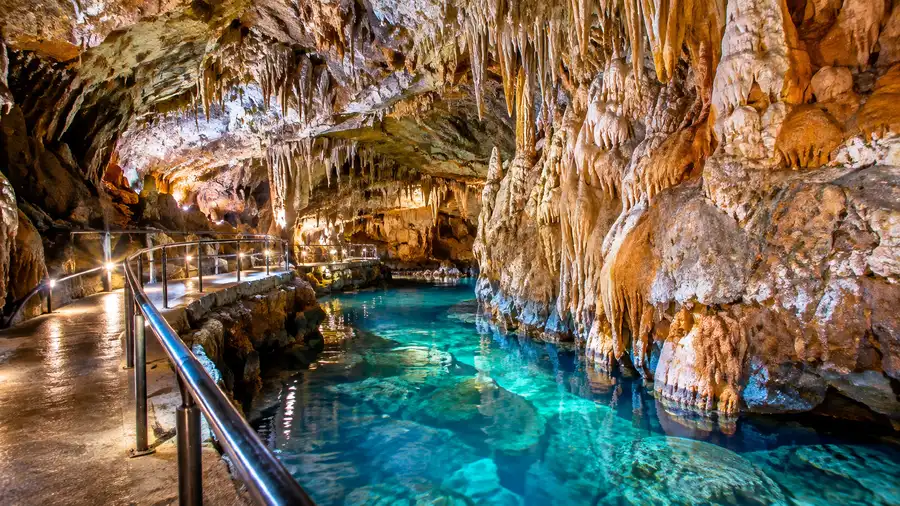
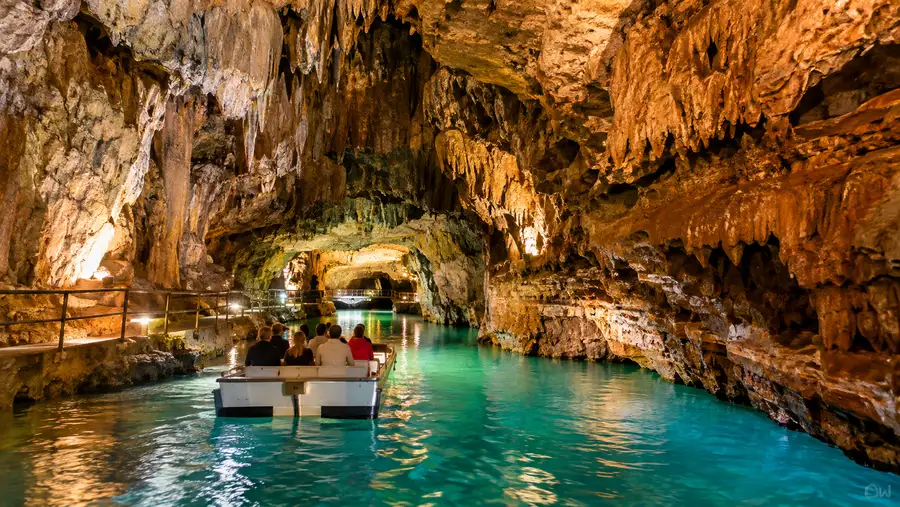
Because the complex sits on the very western perimeter of La Vall d'Uixó, you do not have to fight through narrow old-town residential streets to reach it. Modern ring roads guide you around the town center straight to the base of the cliffs. Once inside the cavern, visitors board small wooden boats to navigate the calm, silent waterways on the underground river boat tour, floating through narrow galleries carved out over hundreds of thousands of years.
Cuevas de San José Como Llegar by Car
Driving gives you complete freedom over your schedule, and the roads in this corner of the Comunitat Valenciana are well maintained. Coming from Valencia city center, your route starts on the V-21 motorway heading north out towards Sagunto. From there, merge seamlessly onto the A-7 autovía toward Castellón. After about thirty-two kilometers on the highway, take exit 283 marked for La Vall d'Uixó and join the CV-230 road. The entire drive covers roughly forty-nine kilometers and takes about forty-two minutes in standard traffic.
From Castellón de la Plana, the trip is even shorter. Take the CV-10 highway southward or follow the coastal AP-7 motorway until the La Vall d'Uixó turnoff. You will hit the CV-230 from the opposite side, clocking in at around twenty-eight kilometers or roughly twenty-five minutes of driving. The approach into the valley offers sudden, lovely views of red-tiled roofs pressed right against dark pine forests.
Pro tip: Skip the jammed lower asphalt parking lot on sunny weekend mornings and drive up the short winding ramp behind the municipal swimming pool, where you will find an upper gravel terrace that almost always has empty spaces.
Parking directly at Paratge de Sant Josep is free of charge. Several tiers of parking lots spread out along the approach road beneath eucalyptus and pine trees. On peak summer days and holiday weekends, the lower spaces fill by 10:30 in the morning. If attendants are directing cars, follow their signals toward the overflow fields rather than circling endlessly looking for curb spots near the ticket kiosks.
Coves de Sant Josep Como Llegar by Bus and Train
Reaching the site without your own vehicle requires some patience and a bit of planning. The municipality does not have its own active railway station, so there is no direct train route dropping you outside the cave gates. If you are figuring out coves de sant josep como llegar using public transport, the most dependable strategy pairs a coastal commuter train with a quick local taxi.
From Valencia's Estació del Nord, board the Renfe Cercanías C6 train heading north toward Castellón. Get off at either Chilches (Xilxes) or Nules, both of which sit about ten kilometers east of the caves. The train ride takes roughly forty-eight minutes and costs around €4.30 each way. From Chilches station, a taxi ride up the gentle slope of the CV-230 into Vall d'Uixó runs between €14 and €18, depending on the day. Local taxis do not always idle outside small town stations, so having the phone number of a Vall d'Uixó radio-taxi company saved on your phone is smart.
Buses run through the regional carrier Hife. Several direct bus lines connect the central bus stations in Castellón and Valencia with La Vall d'Uixó's central bus terminal. From that town terminal, the walk to the cave park measures roughly 1.8 kilometers along Avenida Jaume I and Calle San José. It takes twenty to twenty-five minutes on foot, slightly uphill toward the end.
| Starting Point | Transit Method | Average Travel Time | Estimated One-Way Cost |
|---|---|---|---|
| Valencia Center | Rental or Personal Car (V-21 & A-7) | 42 minutes | €6 in fuel |
| Valencia Nord | Cercanías C6 Train to Chilches + Local Taxi | 1 hour 15 minutes | €18 to €22 total |
| Castellón Bus Station | Direct Regional Bus (Hife) + Walk to Caves | 1 hour 10 minutes | €3.40 |
| Peñíscola Old Town | Car via AP-7 Motorway South | 1 hour 10 minutes | €11 in fuel |
Always double-check regional holiday timetables if traveling on a Sunday or festival day. Bus frequencies drop sharply on non-working days in the Valencian Community, sometimes cutting services down to just two daily departures.
Book your san jose caves valencia experience:
From the North Coast: Cuevas de San Jose Peñiscola Route
Thousands of beach lovers base themselves along the Costa del Azahar every summer, especially around the castle-topped peninsula of Peñíscola. If you want to plan a day excursion from the beach to the cuevas de san jose peñiscola trip, you are in luck because the road connection is completely seamless along the Mediterranean corridor.
The total distancia de peñíscola a las cuevas de san josé measures almost exactly ninety-eight kilometers. Since tolls were removed from the AP-7 highway several years back, you can glide down this wide coastal thoroughfare without paying a cent. Hop on the AP-7 near Benicarló or Peñíscola and steer south past Oropesa del Mar, Benicàssim, and Castellón. Take exit 49 toward La Vall d'Uixó and follow the signs on the CV-10 connection for the final seven kilometers.
Note: Summer afternoon traffic on the AP-7 around the Benicàssim stretch can back up unexpectedly during July and August music festivals, so allow an extra thirty minutes of travel cushion.
Plan your driving time carefully around your reserved cave entry. Missing your tour time slot usually means waiting hours for a standby opening or forfeiting your entry entirely, because capacity inside the fragile subterranean river is tightly restricted. To secure the exact timeslot you need, it pays to spend five minutes booking your cave tickets in advance before hitting the highway.
Que ver cerca de las cuevas de san josé: Towns, Ruins, and Hikes
A tour through the underground chambers takes roughly forty-five minutes from dock to dock. That leaves most of your day wide open, making it foolish to drive straight home after leaving the water. The surrounding Plana Baixa and mountain foothills hide several historic treasures and natural stops that few casual tourists bother to seek out.
Here are several outstanding spots to consider when deciding que ver cerca de las cuevas de san josé:
- Poblado Ibérico de San José: Perched immediately on the cliff above the cave entrance, this archaeological excavation dates back to the 6th century BC. You can walk the stone ramparts and examine ruined stone dwellings with views spanning clean across the coastal plains to the sea.
- Sagunto Roman Theater and Castle: Located just twenty minutes south along the drive back toward Valencia, Sagunto features an enormous hilltop fortress system stretching nearly a kilometer along a limestone ridge, alongside a restored Roman amphitheater.
- Sierra de Espadán Cork Oak Forests: Drive fifteen minutes west deeper into the mountains along the winding CV-230 to reach villages like Alfondeguilla and Chóvar, where red sandstone ravines shelter ancient cork oak trees and peaceful mountain hiking paths.
- La Vilavella Thermal Springs: Only five kilometers from Vall d'Uixó, this sleepy neighbor village is famous across Spain for its mineral-rich thermal water baths and quiet hillside hermitage.
If you prefer seaside strolls after spending your morning underground, the coast sits right on your doorstep. Moncofa and Chilches offer quiet pebbled shores, simple beach chiringuitos, and paved pedestrian walkways that remain refreshingly free from massive high-rise hotels. Eating a traditional mid-day paella in a family-run tavern by the water wraps up a cave road trip in style.
To keep your travel itinerary moving smoothly from arrival to departure, keep these basic operational rules in mind:
- Arrival schedule: Pull into the parking zone at least thirty minutes prior to your boat entry window to allow time for parking and walking to the turnstiles.
- Footwear choices: Wear sturdy shoes with rubber grip, because the subterranean walking path and the climb up to the Iberian ruins are slick limestone.
- Ticket redemption: Download digital passes straight to your phone before reaching the valley, as mobile signal dips inside the limestone gorge near the ticket gates.
Frequently Asked Questions about cuevas de san josé como llegar
What is the easiest way to reach the caves without a car?
The simplest method is boarding the Renfe Cercanías C6 train from Valencia or Castellón, stepping off at Chilches station, and catching a ten-minute local taxi directly to the Paratge de Sant Josep cave complex.
Is parking free at Cuevas de San José?
Yes, all designated municipal parking lots adjacent to the caves and the surrounding park grounds are completely free of charge throughout the entire year.
How long does the drive take from Peñíscola?
Under regular traffic conditions, driving the ninety-eight kilometers south along the toll-free AP-7 motorway takes approximately one hour and ten minutes.
Can you walk from the Vall d'Uixó bus station to the caves?
Yes, the walk is roughly 1.8 kilometers along paved city streets and takes approximately twenty to twenty-five minutes at an easy strolling pace.
Quick Reference
- Driving time from Valencia: 42 minutes via A-7
- Driving time from Peñíscola: 70 minutes via AP-7
- Nearest commuter railway station: Chilches (10 km away)
- On-site vehicle parking: Free year-round
- Cave visit duration: 45 minutes
Book your san jose caves valencia experience:
Before You Go
Navigating out to this subterranean wonder proves surprisingly relaxing compared to fighting city traffic in central Valencia or hunting for parking along the packed boardwalks of the Costa del Azahar. The highway exits are generous, the countryside transitions rapidly from orange groves into sheer limestone peaks, and the mountain air at the valley gate feels noticeably cooler than the coast. Plan your transport around an early morning boat slot, pack walking shoes for the Iberian ruins up top, and take your time exploring the sleepy mountain foothills waiting just beyond the cave mouth.
Read more about san jose caves valencia.